American AI vs. Chinese AI: A Deep Comparison
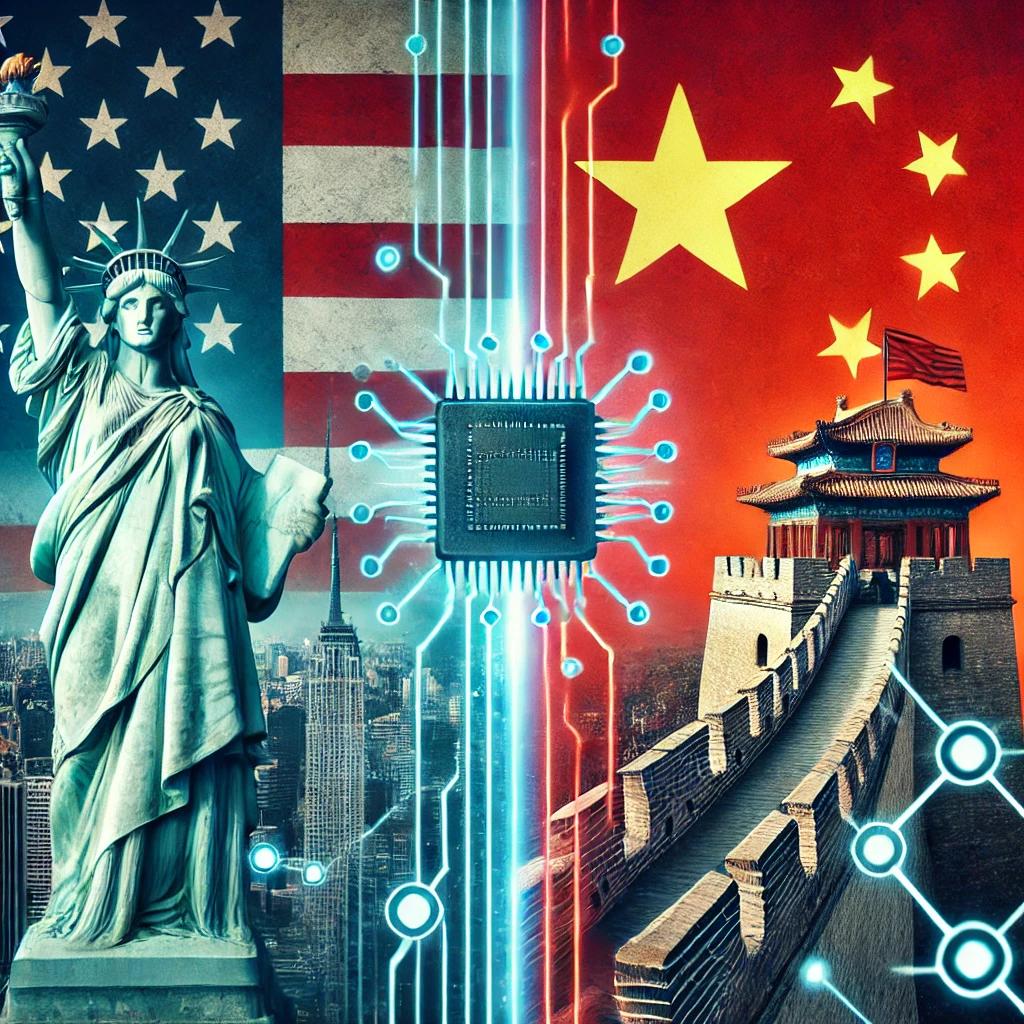
The Two Superpowers of AI
Artificial intelligence has become the defining technological battleground of the 21st century, and no two nations are competing more fiercely than the United States and China. On one side, you have American heavyweights like Claude (Anthropic), ChatGPT (OpenAI), Gemini (Google), and Copilot (Microsoft). On the other, a rapidly maturing roster of Chinese models — DeepSeek, Kimi, Ernie Bot (Baidu), Tongyi Qianwen (Alibaba), and more.
This isn't just a tech race. It's a reflection of two fundamentally different philosophies about what AI should be, who it should serve, and what limits — if any — it should have. Understanding the difference matters whether you're a developer choosing a stack, a designer picking a workflow tool, or simply a curious observer of where the world is headed.
Capability & Raw Performance
American AI models currently lead in most general-purpose benchmarks. Claude, developed by Anthropic, is widely regarded as one of the strongest models for nuanced reasoning, long-context tasks, and safe, thoughtful responses. OpenAI's GPT-4o and o1 series push the frontier on coding, mathematics, and multimodal tasks. Google's Gemini Ultra excels at integrating real-time web data with deep reasoning.
Chinese models have closed the gap dramatically in 2024–2025. DeepSeek's R1 model shocked the industry by matching or exceeding GPT-4 on several coding and reasoning benchmarks — at a fraction of the training cost. Kimi (Moonshot AI) has impressed with its extremely long context window, handling documents upwards of 200,000 tokens. These aren't toys; they are serious, production-grade models that deserve genuine respect from Western developers.
Censorship & Content Restrictions
This is where the philosophical divide becomes impossible to ignore. Chinese AI models are subject to strict content regulations under China's Generative AI Regulations, which require outputs to reflect "core socialist values" and prohibit content that undermines national unity, challenges the Communist Party, or discusses politically sensitive topics like Tiananmen Square, Taiwan independence, or Xinjiang.
American models are not without their own content restrictions — Claude, ChatGPT, and Gemini all have safety guardrails around harmful content, misinformation, and dangerous information. But these restrictions are built around harm prevention rather than political compliance. An American model will refuse to help synthesize a bioweapon; a Chinese model may refuse to acknowledge that a particular historical event occurred. The nature of the restriction reveals the nature of the values baked into the system.
Data Privacy & Where Your Data Goes
Data sovereignty is one of the most pressing concerns for enterprise users comparing American and Chinese AI tools. American AI companies are subject to US privacy law, GDPR for European users, and increasingly robust data handling policies — Anthropic, for instance, offers enterprise agreements with strong data retention controls and zero-training-on-customer-data options.
Chinese AI tools raise legitimate concerns in this area. Under China's National Intelligence Law, Chinese companies may be compelled to share data with government authorities upon request. This doesn't mean every Chinese AI tool is actively surveilling users — but it does mean that for sensitive business or personal use cases, the legal framework is fundamentally different. Many enterprises operating in regulated industries have already established blanket policies against using Chinese-hosted AI services for this reason.
Design & Creative Use Cases
For designers specifically, the practical differences between American and Chinese AI tools come down to integration, language quality, and creative range. Claude and ChatGPT have deep integrations with Western design tools — Figma plugins, Webflow CMS connections, Adobe Express APIs — making them natural fits for design workflows that already live in those ecosystems.
Chinese AI tools have developed impressive capabilities for the Chinese-language design market, particularly in e-commerce, social media content for platforms like WeChat and Douyin, and culturally-specific visual aesthetics. Tongyi Qianwen's image generation capabilities are tailored to Chinese visual culture in ways that Midjourney or DALL-E simply aren't. For designers working on global campaigns with a China-facing component, these tools offer genuine value that Western alternatives can't fully replicate.
Speed, Cost & Accessibility
One of the most surprising stories of the past year has been the cost efficiency of Chinese AI models. DeepSeek's API pricing is dramatically lower than OpenAI or Anthropic's equivalents — sometimes by an order of magnitude — which has made it attractive for high-volume applications where cost is a primary concern. Kimi and other Chinese models have similarly aggressive pricing strategies aimed at rapid market penetration.
American models, particularly at the frontier tier, command premium pricing that reflects their R&D investment and infrastructure scale. However, models like Claude Haiku and GPT-4o Mini have introduced genuinely affordable tiers that close much of the gap. For most individual designers and small studios, cost differences between the two camps are unlikely to be the deciding factor — but for large-scale automated content pipelines, the economics look very different.
Which Should You Use?
The honest answer is: it depends on what you're building and where you're operating. For most Western designers, developers, and creative professionals, American AI tools — and Claude in particular — offer the best combination of capability, safety, integration depth, and data privacy. The ecosystem around these tools is richer, the documentation is more accessible, and the alignment between the tool's values and most users' values is stronger.
Chinese AI tools are worth exploring for specific use cases: cost-sensitive API workloads, projects with a Chinese-language or China-market component, or simply to stay informed about what the competition is doing. The AI landscape will only grow more global and more complex. The wisest approach isn't tribalism — it's understanding both sides of the equation well enough to make smart, intentional choices about which tools you trust with your work, your data, and your creative process.